Corgi Health Testing Explained: DM, VWD1, EIC and OFA
When you read about our parent dogs, you will see terms like DM clear, VWD1 clear, EIC clear and OFA hips. They are not marketing words; they are results from tests that help breeders avoid passing on inherited disease. I explain them here so you can ask any breeder the right questions.
This is general information, not veterinary advice. Your vet can tell you more about your own dog.
Degenerative myelopathy (DM)
DM is an inherited disease of the spinal cord that usually appears in older dogs as weakness in the hind legs. A DNA test shows whether a dog is clear, a carrier or at risk. Breeders use the result to pair dogs so they do not produce at-risk puppies.
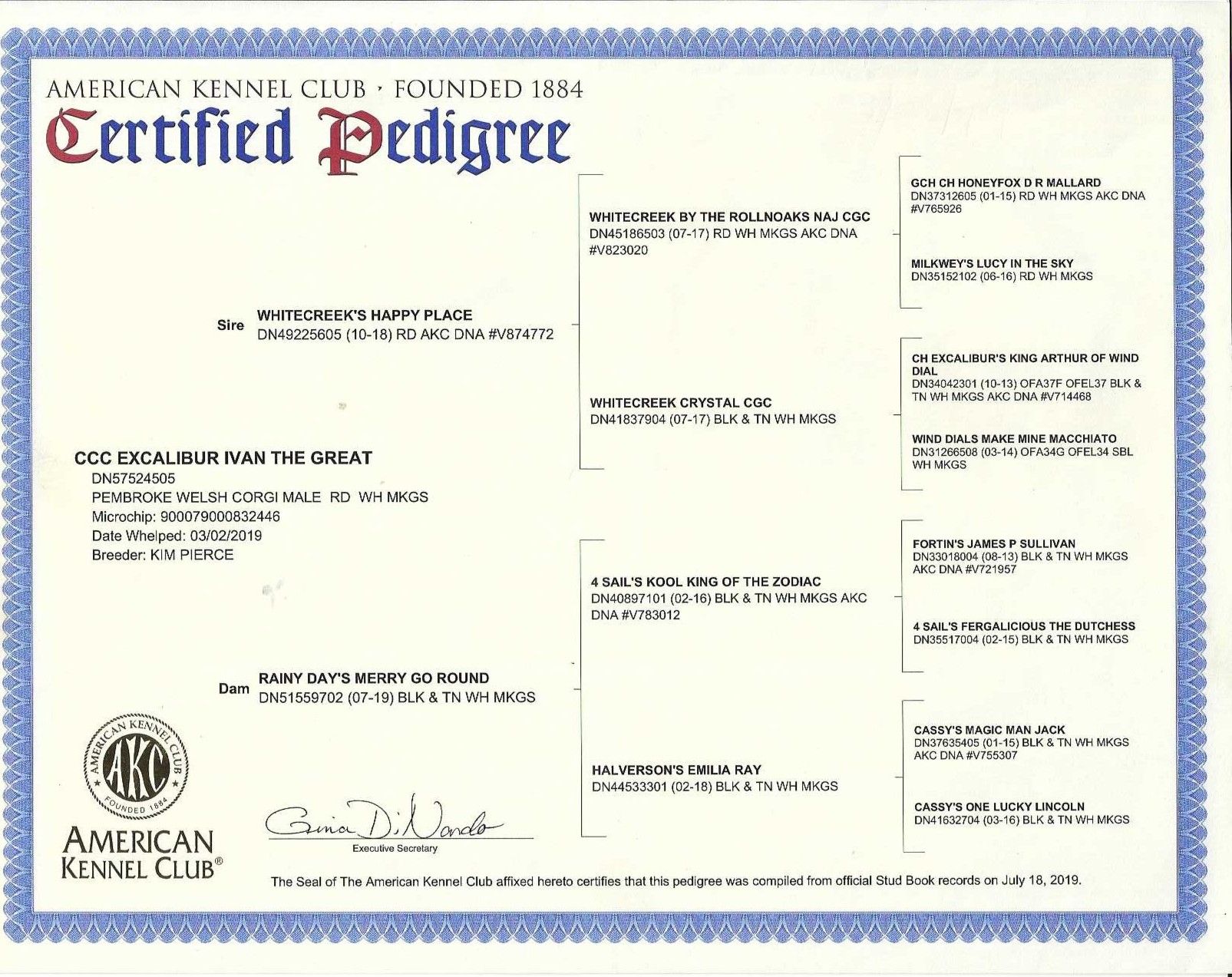
On our site you will see notes like "DM clear" on adult dog pages, such as Ivan and Deacon.
Von Willebrand disease type 1 (VWD1)
VWD1 is an inherited bleeding disorder. Dogs with it may bleed longer after injury or surgery. A simple DNA test tells breeders whether a dog is clear or a carrier.
Knowing a dog's result matters even if it is only a carrier, because breeders can plan pairings to avoid affected puppies.
Exercise-induced collapse (EIC)
EIC is a genetic condition in which a dog can become weak or collapse after intense exercise or excitement. A DNA test identifies carriers and affected dogs. A "clear" result means the dog does not carry the gene.
Our pages note when a parent is EIC clear.
OFA evaluations: hips, elbows and eyes
The Orthopedic Foundation for Animals evaluates hips and elbows by x-ray and publishes ratings. Eyes are examined by a veterinary eye specialist. A rating such as "Fair" hips or "Normal" eyes tells you how that dog scored at the time.
Parents with good hip, elbow and eye scores are more likely to produce puppies with sound structure, though no test guarantees any individual puppy.
What about fluffy carriers and CHIC numbers?
"Fluffy" is a long coat caused by a recessive gene. A fluffy carrier has a normal coat but can pass it on. It is a coat trait, not a disease. See our guide to fluffy corgis.
A CHIC number means a dog has completed the health tests required for the breed and the results are publicly recorded. You can see one on our Deacon page.
What testing does not guarantee
Testing lowers risk but cannot eliminate it. Corgis can still develop back, hip or eye problems, and some conditions are not tested for. That is why we also provide a genetic health guarantee and encourage good weight and exercise habits.
Ask any breeder to show the parents' test results, and see how to choose a reputable corgi breeder. To meet our dogs, visit Our Corgis.
How to read a breeder's health results
When a breeder lists results, look for the name of the test and the result. "DM clear" means the dog tested negative for the DM gene. "Carrier" means the dog has one copy and is usually healthy but can pass it on. "At risk" or "affected" means two copies.
For OFA results, look for the rating and the registration number, which you can verify on the OFA website. Be careful with vague claims such as "vet checked" without specifics.
Questions to ask your breeder
Ask which tests were done on both parents, not just one. Ask when they were done and whether the results are on file. Ask what the guarantee covers if a puppy develops a genetic condition.
Ask how the breeder uses test results when choosing pairings. A breeder who can explain their choices has thought about the puppies' health.
What you can do at home
After you bring your puppy home, keep your corgi lean, protect its back, provide regular vet care and watch for early signs of problems such as limping, pain or changes in behavior. Early detection makes treatment easier.
If you want to see the results for our dogs, visit Our Corgis and open the individual dog pages.
How testing affects the puppies you meet
When both parents are tested and the results are used to plan pairings, the chance of producing puppies with inherited conditions is much lower. That is the goal of health testing: fewer sick puppies and more years of good health.
It also means you can ask for proof. You should never have to take a breeder's word for it, and you should be able to see test results for the parents of your puppy.
Costs and timing
DNA tests are inexpensive compared with treating a genetic disease, and hip and elbow x-rays require a vet visit and fee. Breeders typically test dogs before breeding and again as needed. Part of what you pay for in a puppy is this work.
This is one reason very cheap puppies are a warning sign. See our guide on corgi puppy costs.
Common questions about testing
Do puppies need to be tested too? Parents are tested so puppies can be predicted, and your vet can advise about further screening. Can a clear parent still have an unhealthy puppy? Testing covers specific conditions, not every possible problem. Are mixed breeds tested? Tests exist for many conditions, and your vet can help.
If you have a specific condition in mind, ask your breeder and your vet.