Pembroke vs Cardigan Welsh Corgi: Which Is Right for You?
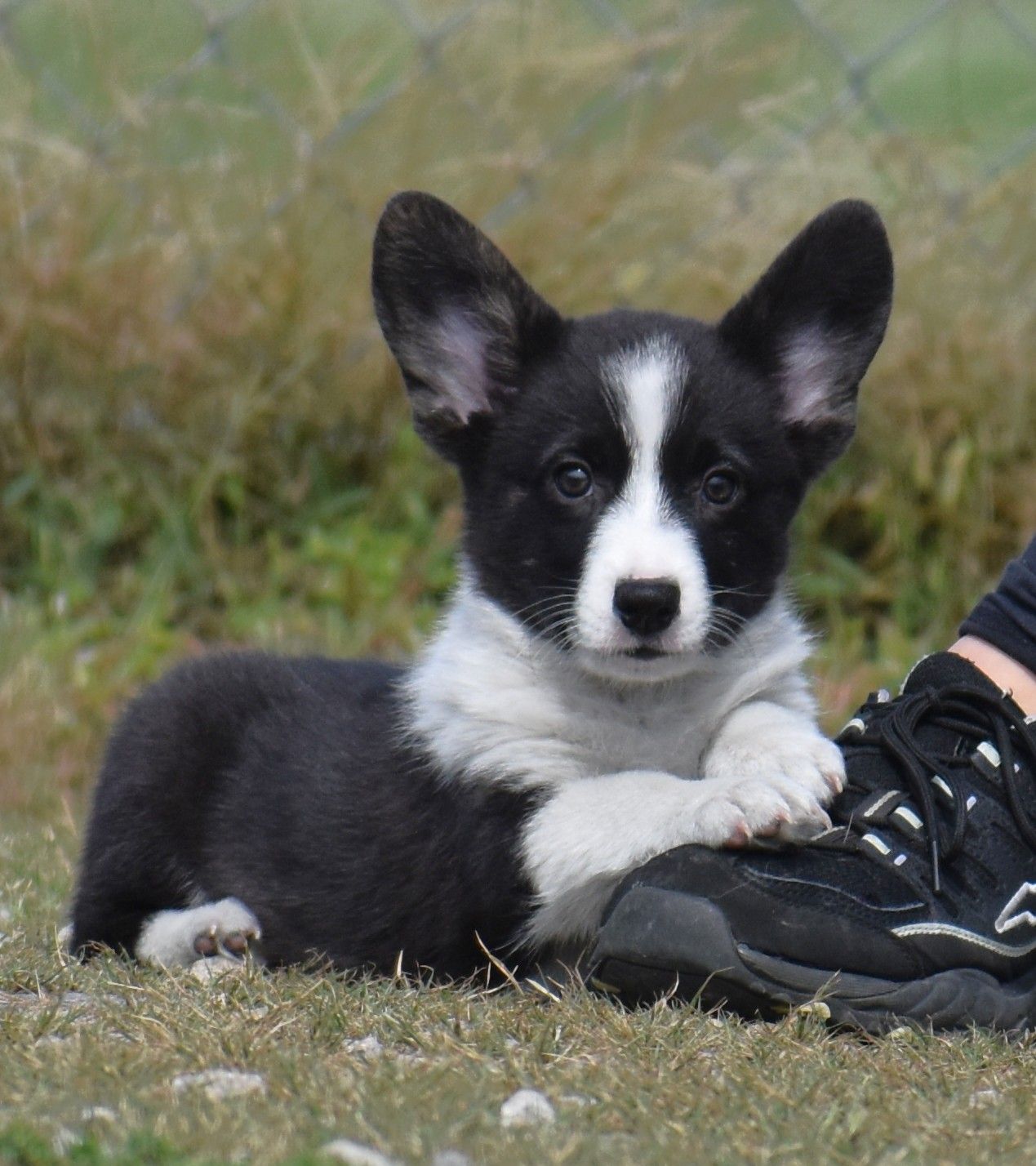
People often ask me whether to choose a Pembroke or a Cardigan Welsh Corgi. They look alike at a glance, but they are two separate breeds with different histories, builds and personalities. We raise both at F&M Corgis in Mulberry, Kansas, so I can tell you what I see in each every day.
This guide compares the two on size, tail, coat, color, temperament and care, so you can decide which suits your family.
Size and build
Pembrokes are the smaller breed. They usually stand about 10 to 12 inches tall and weigh up to roughly 30 pounds. Cardigans are a little taller and heavier, often 30 to 38 pounds, with a sturdier, longer body and heavier bone.
If you plan to lift your dog into a car or carry it up steps, the Pembroke's lighter weight can be easier. If you prefer a sturdier dog, the Cardigan may feel more substantial.
Tail and ears
The tail is the clearest difference. Cardigans have a long, fox-like tail that hangs low. Pembrokes have a naturally short tail, sometimes called a bobtail, and some are born with almost no tail at all.
Cardigan ears are larger and more rounded at the tips, while Pembroke ears are pointed and a little smaller. Puppy ears often flop for the first few months before standing.
Coat and color
Both breeds have a double coat that sheds year round, with heavier shedding twice a year. Pembrokes are commonly red, sable, fawn, or black and tan, usually with white markings. Cardigans come in a wider range, including brindle, blue merle, black, red and sable.
Both can carry the long-coat "fluffy" gene, and our parent dogs' pages note when a dog is a fluffy carrier. Read more in our guide on what a fluffy corgi is.
Temperament
Both breeds were herding dogs, so both are intelligent, alert and energetic. Pembrokes tend to be outgoing and bouncy, quick to make friends. Cardigans are often described as steadier and a little more reserved with strangers, while staying deeply loyal to their family.
Either breed may nip at heels and bark to alert you. Early socialization and consistent training matter more than breed for how a puppy turns out.
Health and lifespan
Both breeds can be prone to back problems because of their long spines, as well as hip and eye conditions. Responsible breeders test parents for genetic conditions such as DM, VWD1 and EIC and have hips, elbows and eyes evaluated by the OFA.
With good care, corgis typically live about 12 to 14 years. Our health testing guide explains each test.
Which should you choose?
Choose a Pembroke if you want a smaller, peppy dog with a short tail and pointed ears. Choose a Cardigan if you want a larger, steadier dog with a long tail and bigger ears. Both do well with children and other dogs when raised in a social home.
You can meet both breeds on our Puppies page and see the parents on Our Corgis. If you are still unsure, call Michelle at (620) 764-3565 and we will talk it through.
Living with each breed day to day
In daily life, the differences are subtle. A Pembroke will often bounce through the house, quick to greet visitors and ready to play. A Cardigan may watch from a spot near you and then join in, a little more deliberate but just as loving. Both want to be where their people are.
Both need daily exercise, and both thrive on training. Both will test boundaries, as herding dogs do, so a firm and kind routine from the first day matters more than the breed you pick.
Common misconceptions
Many people believe Cardigans are just "Pembrokes with tails." In fact they are separate breeds with their own history, standards and build. Another myth is that one breed does not shed. Both shed, and both need brushing.
People also assume the smaller dog is easier. A Pembroke is lighter to carry, but a sturdier Cardigan may handle rough play and long walks with ease. Choose based on how you live, not only on size.
Meet them before you decide
The best way to decide is to meet both. Watch how the puppies play, look at the parents and ask questions. We keep both breeds at our farm in Mulberry, so you can compare them side by side by appointment. You can also see photos of all our adults on the Our Corgis page.
Cost and availability
Both breeds from a responsible breeder are priced similarly. At F&M Corgis, the puppies listed right now run from $3,000 to $3,300, and each puppy page shows its price. Availability changes with each litter, so a breed you want may not be available today.
If you have your heart set on one breed, call Michelle and ask about upcoming litters. Planning ahead usually means you can choose the sex and color you prefer.
Questions families ask us most
Which breed is better with kids? Both do well, and early socialization matters most. Which one barks less? Neither is quiet, and training helps either breed. Which one is easier to groom? Both need regular brushing, with heavy shedding twice a year.
Which one is healthier? Both breeds have similar risks, so look at the parents' health testing rather than the breed name. Our dogs' results are on their pages on the Our Corgis page.